
Robust Weight Perturbation for Adversarial Training
Proceedings of the Thirty-First International Joint Conference on Artificial Intelligence. Main Track. Pages 3688-3694.
https://doi.org/10.24963/ijcai.2022/512
Keywords
- Machine Learning: Adversarial Machine Learning
Abstract
Overfitting widely exists in adversarial robust training of deep networks. An effective remedy is adversarial weight perturbation, which injects the worst-case weight perturbation during network training by maximizing the classification loss on adversarial examples. Adversarial weight perturbation helps reduce the robust generalization gap; however, it also undermines the robustness improvement. A criterion that regulates the weight perturbation is therefore crucial for adversarial training. In this paper, we propose such a criterion, namely Loss Stationary Condition (LSC) for constrained perturbation. With LSC, we find that it is essential to conduct weight perturbation on adversarial data with small classification loss to eliminate robust overfitting. Weight perturbation on adversarial data with large classification loss is not necessary and may even lead to poor robustness. Based on these observations, we propose a robust perturbation strategy to constrain the extent of weight perturbation. The perturbation strategy prevents deep networks from overfitting while avoiding the side effect of excessive weight perturbation, significantly improving the robustness of adversarial training. Extensive experiments demonstrate the superiority of the proposed method over the state-of-the-art adversarial training methods.
- [Athalye et al., 2018] Anish Athalye, Nicholas Carlini, and David Wagner. Obfuscated gradients give a false sense of security: Circumventing defenses to adversarial examples. In International conference on machine learning, pages 274-283. PMLR, 2018.
- [Belkin et al., 2019] Mikhail Belkin, Daniel Hsu, Siyuan Ma, and Soumik Mandal. Reconciling modern machine- learning practice and the classical bias-variance trade- off. Proceedings of the National Academy of Sciences, 116(32):15849-15854, 2019.
- [Carmon et al., 2019] Yair Carmon, Aditi Raghunathan, Ludwig Schmidt, Percy Liang, and John C Duchi. Unla- beled data improves adversarial robustness. arXiv preprint arXiv:1905.13736, 2019.
- [Chen et al., 2020] Tianlong Chen, Zhenyu Zhang, Sijia Liu, Shiyu Chang, and Zhangyang Wang. Robust overfit- ting may be mitigated by properly learned smoothening. In International Conference on Learning Representations, 2020.
- [Chen et al., 2021] Chen Chen, Jingfeng Zhang, Xilie Xu, Tianlei Hu, Gang Niu, Gang Chen, and Masashi Sugiyama. Guided interpolation for adversarial training. arXiv preprint arXiv:2102.07327, 2021.
- [Croce and Hein, 2020] Francesco Croce and Matthias Hein. Reliable evaluation of adversarial robustness with an en- semble of diverse parameter-free attacks. In Interna- tional conference on machine learning, pages 2206-2216.
- PMLR, 2020.
- [Devlin et al., 2018] Jacob Devlin, Ming-Wei Chang, Ken- ton Lee, and Kristina Toutanova. Bert: Pre-training of deep bidirectional transformers for language understand- ing. arXiv preprint arXiv:1810.04805, 2018.
- [Goodfellow et al., 2014] Ian J Goodfellow, Jonathon Shlens, and Christian Szegedy. Explaining and harnessing adversarial examples. arXiv preprint arXiv:1412.6572, 2014.
- [He et al., 2016] Kaiming He, Xiangyu Zhang, Shaoqing Ren, and Jian Sun. Deep residual learning for image recog- nition. In Proceedings of the IEEE conference on computer vision and pattern recognition, pages 770-778, 2016.
- [Lee et al., 2020] Saehyung Lee, Hyungyu Lee, and Sun- groh Yoon. Adversarial vertex mixup: Toward better ad- versarially robust generalization. In Proceedings of the IEEE/CVF Conference on Computer Vision and Pattern Recognition, pages 272-281, 2020.
- [Madry et al., 2017] Aleksander Madry, Aleksandar Makelov, Ludwig Schmidt, Dimitris Tsipras, and Adrian Vladu. Towards deep learning models resistant to adversarial attacks. arXiv preprint arXiv:1706.06083, 2017.
- [Rice et al., 2020] Leslie Rice, Eric Wong, and Zico Kolter. Overfitting in adversarially robust deep learning. In Inter- national Conference on Machine Learning, pages 8093- 8104. PMLR, 2020. Schmidt et al., 2018] Ludwig Schmidt, Shibani Santurkar, Dimitris Tsipras, Kunal Talwar, and Aleksander Madry. Adversarially robust generalization requires more data. Advances in Neural Information Processing Systems, 31:5014-5026, 2018.
- [Song et al., 2020] Chubiao Song, Kun He, Jiadong Lin, Li- wei Wang, and John E Hopcroft. Robust local features for improving the generalization of adversarial training. In International Conference on Learning Representations, 2020.
- [Szegedy et al., 2013] Christian Szegedy, Wojciech Zaremba, Ilya Sutskever, Joan Bruna, Dumitru Erhan, Ian Goodfellow, and Rob Fergus. Intriguing properties of neural networks. arXiv preprint arXiv:1312.6199, 2013.
- [Uesato et al., 2019] Jonathan Uesato, Jean-Baptiste Alayrac, Po-Sen Huang, Robert Stanforth, Alhussein Fawzi, and Pushmeet Kohli. Are labels required for improving adversarial robustness? arXiv preprint arXiv:1905.13725, 2019.
- [Wang et al., 2017] Yisen Wang, Xuejiao Deng, Songbai Pu, and Zhiheng Huang. Residual convolutional ctc net- works for automatic speech recognition. arXiv preprint arXiv:1702.07793, 2017.
- [Wu et al., 2020] Dongxian Wu, Shu-Tao Xia, and Yisen Wang. Adversarial weight perturbation helps robust gen- eralization. Advances in Neural Information Processing Systems, 33, 2020.
- [Wu et al., 2021] Boxi Wu, Heng Pan, Li Shen, Jindong Gu, Shuai Zhao, Zhifeng Li, Deng Cai, Xiaofei He, and Wei Liu. Attacking adversarial attacks as a defense. arXiv preprint arXiv:2106.04938, 2021.
- [Zagoruyko and Komodakis, 2016] Sergey Zagoruyko and Nikos Komodakis. Wide residual networks. arXiv preprint arXiv:1605.07146, 2016.
- [Zhai et al., 2019] Runtian Zhai, Tianle Cai, Di He, Chen Dan, Kun He, John Hopcroft, and Liwei Wang. Adver- sarially robust generalization just requires more unlabeled data. arXiv preprint arXiv:1906.00555, 2019.
- [Zhang and Xu, 2019] Haichao Zhang and Wei Xu. Adver- sarial interpolation training: A simple approach for im- proving model robustness. 2019.
- [Zhang et al., 2019] Hongyang Zhang, Yaodong Yu, Jiantao Jiao, Eric Xing, Laurent El Ghaoui, and Michael Jordan. Theoretically principled trade-off between robustness and accuracy. In International Conference on Machine Learn- ing, pages 7472-7482. PMLR, 2019.
- [Zhang et al., 2020] Jingfeng Zhang, Jianing Zhu, Gang Niu, Bo Han, Masashi Sugiyama, and Mohan Kankanhalli. Geometry-aware instance-reweighted adversarial training. arXiv preprint arXiv:2010.01736, 2020.
- [Zhou et al., 2021] Dawei Zhou, Nannan Wang, Bo Han, and Tongliang Liu. Modeling adversarial noise for adversarial defense. arXiv preprint arXiv:2109.09901, 2021.
References were extracted automatically from the PDF and may contain errors.
Full text extracted automatically from the PDF; figures, tables and equations may differ. The PDF is the version of record.
1 Introduction
Although deep neural networks (DNNs) have led to impressive breakthroughs in a number of fields such as computer vision [He et al., 2016], speech recognition [Wang et al., 2017], and NLP [Devlin et al., 2018], they are extremely vulnerable to adversarial examples that are crafted by adding small and human-imperceptible perturbation to normal examples [Szegedy et al., 2013; Goodfellow et al., 2014].
∗This work is done during an internship at JD Explore Academy
†Corresponding author
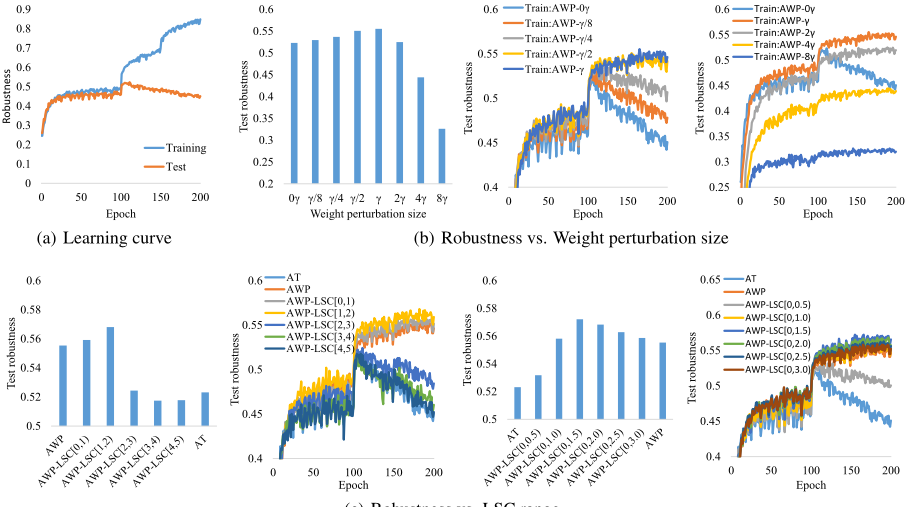
The vulnerability of DNNs has attracted extensive attention and led to a large number of defense techniques against adversarial examples. Across existing defenses, adversarial training (AT) is one of the strongest empirical defenses. AT directly incorporates adversarial examples into the training process to solve a min-max optimization problem [Madry et al., 2017], which can obtain models with moderate adversarial robustness and has not been comprehensively attacked [Athalye et al., 2018]. However, different from the natural training scenario, overfitting is a dominant phenomenon in adversarial robust training of deep networks [Rice et al., 2020]. After a certain point in AT, the robust performance on test data will continue to degrade with further training, as shown in Figure 1(a). This phenomenon, termed as robust overfitting, breaches the common practice in deep learning that using over-parameterized networks and training for as long as possible [Belkin et al., 2019]. Such anomaly in AT causes detrimental effects on the robust generalization performance and subsequent algorithm assessment [Rice et al., 2020; Chen et al., 2020]. Relief techniques that mitigate robust overfitting have thus become crucial for adversarial training.
An effective remedy for robust overfitting is Adversarial Weight Perturbation (AWP) [Wu et al., 2020], which forms a double-perturbation mechanism that adversarially perturbs both inputs and weights:
where n is the number of training examples, x′i is the adversarial example of xi, fw is the DNN with weight w, ℓ(·) is the loss function, ϵ is the maximum perturbation constraint for inputs (i.e., ||x′i - xi||p ≤ ϵ), and V is the feasible perturbation region for weights (i.e., {v ∈ V : ||v||2 ≤ γ||w||2}, where γ is the constraint on weight perturbation size). The inner maximization is to find adversarial examples x′i within the ϵ-ball centered at normal examples xi that maximizes the classification loss ℓ. On the other hand, the outer maximization is to find weight perturbation v that maximizes the loss ℓ on adversarial examples to reduce robust generalization gap. This is the problem of training a weight-perturbed robust classifier on adversarial examples. Therefore, how well the weight perturbation is found directly affects the performance of the outer minimization, i.e., the robustness of the classifier.
Several attack methods have been used to solve the inner maximization problem in Eq.(1), such as Fast Gradient Sign Method (FGSM) [Goodfellow et al., 2014] and Projected Gradient Descent (PGD) [Madry et al., 2017]. For the outer maximization problem, AWP [Wu et al., 2020] injects the worst-case weight perturbation to reduce robust generalization gap. However, the extent to which the weights should be perturbed has not been explored. Without an appropriate criterion to regulate the weight perturbation, the adversarial training procedure is difficult to unleash its full power, since worst-case weight perturbation will undermine the robustness improvement (in Section 3). In this paper, we propose such a criterion, namely Loss Stationary Condition (LSC) for constrained perturbation (in Section 3), which helps to better understand robust overfitting, and this in turn motivates us to propose an improved weight perturbation strategy for better adversarial robustness (in Section 4). Our main contributions as follows:
- We propose a principled criterion LSC to analyse the adversarial weight perturbation. It provides a better understanding of robust overfitting in adversarial training, and it is also a good indicator for efficient weight perturbation.
- With LSC, we find that better perturbation of model weights is associated with perturbing on adversarial data with small classification loss. For adversarial data with large classification loss, weight perturbation is not necessary and can even be harmful.
- We propose a robust perturbation strategy to constrain the extent of weight perturbation. Experiments show that the robust strategy significantly improves the robustness of adversarial training.
2 RelatedWork
2.1 Adversarial Attacks
Let X denote the input feature space and Bp ϵ (x) = {x′ ∈ X : ||x′ - x||p ≤ ϵ} be the ℓp-norm ball of radius ϵ centered at x in X. Here we selectively introduce several commonly used adversarial attack methods.
Fast Gradient Sign Method (FGSM). FGSM [Goodfellow et al., 2014] perturbs natural example x for one step with step size ϵ along the gradient direction:
Projected Gradient Descent (PGD). PGD [Madry et al., 2017] is a stronger iterative variant of FGSM, which perturbs normal example x for multiple steps K with a smaller step size α:
where U denotes the uniform distribution, x0 denotes the normal example disturbed by a small uniform random noise, xk denotes the adversarial example at step k, and ΠBp ϵ (x) denotes the projection function that projects the adversarial example back into the set Bp ϵ (x) if necessary.
AutoAttack (AA). AA [Croce and Hein, 2020] is an ensemble of complementary attacks, which consists of three white-box attacks and a black-box attack. AA regards models to be robust only if the models correctly classify all types of adversarial examples, which is among the most reliable evaluation of adversarial robustness to date.
2.2 Adversarial Defense
Since the discovery of adversarial examples, a large number of works have emerged for defending against adversarial attacks, such as input denoising [Wu et al., 2021], modeling adversarial noise [Zhou et al., 2021], and adversarial training [Goodfellow et al., 2014; Madry et al., 2017]. Among them, adversarial training has been demonstrated to be one of the most effective method [Athalye et al., 2018]. Based on adversarial training, a wide range of subsequent works are then proposed to further improve the model robustness. Here, we introduce two currently state-of-the-art AT frameworks.
TRADES. TRADES [Zhang et al., 2019] optimizes a regularized surrogate loss that is a trade-off between the natural accuracy and adversarial robustness:
where CE is the cross-entropy loss that encourages the network to maximize the natural accuracy, KL is the KullbackLeibler divergence that encourages to improve the robust accuracy, and β is the hyperparameter to control the trade-off between natural accuracy and adversarial robustness.
Robust Self-Training (RST). RST [Carmon et al., 2019] utilize additional 500K unlabeled data extracted from the 80 Million Tiny Images dataset. RST first leverages the surrogate natural model to generate pseudo-labels for these unlabeled data, and then adversarially trains the network with both additional pseudo-labeled unlabeled data (˜x, ˜ y) and original labeled data (x, y) in a supervised setting:
where λ is the weight on unlabeled data.
2.3 Robust Overfitting
Nowadays, there are effective countermeasures to alleviate the overfitting in natural training. But in adversarial training, robust overfitting widely exists and those common countermeasures used in natural training help little [Rice et al., 2020]. [Schmidt et al., 2018] explains robust overfitting partially from the perspective of sample complexity, and is supported by empirical results in derivative works, such as adversarial training with semi-supervised learning [Carmon et al., 2019; Uesato et al., 2019; Zhai et al., 2019], robust local feature [Song et al., 2020] and data interpolation [Zhang and Xu, 2019; Lee et al., 2020; Chen et al., 2021]. Separate works have also attempt to mitigate robust overfitting by the unequal treatment of data [Zhang et al., 2020] and weight smoothing [Chen et al., 2020]. Recent study [Wu et al., 2020] reveals the
(c) Robustness vs. LSC range
Figure 1: (a): The learning curve of vanilla AT; (b): Test robustness of AWP with varying weight perturbation size; (c): Test robustness of AWP with varying LSC range.
connection between the flatness of weight loss landscape and robust generalization gap, and proposes to incorporate adversarial weight perturbation mechanism in the adversarial training framework. Despite the efficacy of adversarial weight perturbation in suppressing the robust overfitting, a deeper understanding of robust overfitting and a clear direction for valid weight perturbation is largely missing. The outer maximization in Eq.(1) lacks an effective criterion to regulate and constrain the extent of weight perturbation, which in turn influences the optimization of the outer minimization. In this paper, we propose such a criterion and provide new understanding of robust overfitting. Following this, we design a robust weight perturbation strategy that significantly improves the robustness of adversarial training.
3 Loss Stationary Condition
In this section, we first empirically investigate the relationship between weight perturbation robustness and adversarial robustness, and then propose a criterion to analyse the adversarial weight perturbation, which leads to a new perspective of robust overfitting. To this end, some discussions about robust overfitting and weight perturbation are provided.
Does Weight Perturbation Robustness Certainly Lead to Better Adversarial Robustness? First, we investigate whether the robustness against weight perturbation is beneficial to the adversarial robustness. In particular, we train PreAct ResNet-18 with AWP on CIFAR-10 using varying weight perturbation size from 0γ, γ/8, γ/4, γ/2, γ, 2γ, 4γ to 8γ. In each setting, we evaluate the robustness of the model against
20-step PGD (PGD-20) attacks on CIFAR-10 test images. As shown in Figure 1(b), when weight perturbation size is small, the best adversarial robustness has a certain improvement. However, when weight perturbation size is large, the best adversarial robustness begins to decrease significantly as the size of the perturbation increases. It can be explained by the fact that the network has to sacrifice adversarial robustness to allocate more capacity to defend against weight perturbation when weight perturbation size is large, which indicates that weight perturbation robustness and adversarial robustness are not mutually beneficial. As shown in Figure 1(b), the performance gain of AWP is mainly due to suppressing robust overfitting.
Loss Stationary Condition. In order to further analyse the weight perturbation, we propose a criterion that divides the training adversarial examples into different groups according to their classification loss:
where p ≤ q. The adversarial data in the group all satisfy their adversarial loss within a certain range, which is termed Loss Stationary Condition (LSC). The proposed criterion LSC allows the analysis of grouped adversarial data independently, and provides more insights into the robust overfitting.
LSC view of Adversarial Weight Perturbation. To provide more insight into how AWP suppresses robust overfitting, we train PreAct ResNet-18 on CIFAR-10 by varying the LSC group that performs adversarial weight perturbation. In each setting, we evaluate the robustness of the model against
Algorithm 1 Robust Weight Perturbation (RWP)
Input: Network fw, training data S, mini-batch B, batch size n, learning rate η, PGD step size α, PGD steps K1, PGD constraint ϵ, RWP steps K2, RWP constraint γ, minimum loss value cmin.
Output: Adversarially robust model fw. repeat Read mini-batch xB from training set S. x′B ← xB + δ, where δ ∼ Uniform(-ϵ, ϵ) for k = 1 to K1 do x′B ← Πϵ(x′B + α · sign(∇x′B ℓ(fw(x′B ), y))) end for Initialize v = 0 for k = 1 to K2 do V = IB(ℓ(fw+v(x′B ), y) ≤ cmin) if ∑ V = 0 then break else v ← v +∇v(V · ℓ(fw+v(x′B ), y)) v ← γ v ||v|| ||w|| end if end for w ← (w+v)-η∇w+v 1n ∑ni=1 ℓ(fw+v(x′(i) B ), y(i) )-v until training convergedPGD-20 attacks on CIFAR-10 test images. As shown in Figure 1(c), when varying the LSC range, we can observe that conducting adversarial weight perturbation on adversarial examples with small classification loss is sufficient to eliminate robust overfitting. However, conducting adversarial weight perturbation on adversarial examples with large classification loss fails to suppress robust overfitting. The results indicate that to eliminate robust overfitting, it is essential to prevent the model from memorizing these easy-to-learn adversarial examples. Besides, it is observed that conducting adversarial weight perturbation on adversarial examples with large classification loss leads to worse adversarial robustness, which again verifies that the robustness against weight perturbation will not bring adversarial robustness gain, or even on the contrary, it undermines the adversarial robustness enhancement.
Do We Really Need the Worst-case Weight Perturbation? As aforementioned, the robustness against weight perturbation is not beneficial to the adversarial robustness improvement. Therefore, to purely eliminate robust overfitting, conducting worst-case weight perturbation on these adversarial examples is not necessary. In the next section, we will propose a robust perturbation strategy to address this issue.
4 Robust Weight Perturbation
As mentioned in Section 3, conducting adversarial weight perturbation on adversarial examples with small classification loss is enough to prevent robust overfitting and leads to higher robustness. However, conducting adversarial weight perturbation on adversarial examples with large classification loss may not be helpful. Recalling the criterion LSC proposed in Section 3, we have seen that the loss is closely correlated with the tendency of adversarial example to be overfitted. Thus, it can be used to constrain the extent of weight perturbation at a fine-grained level. Therefore, we propose to conduct weight perturbation on adversarial examples that are below a minimum loss value, so as to ensure that no robust overfitting occurs while avoiding the side effect of excessive weight perturbation. Let cmin be the minimum loss value. Instead of generating weight perturbation v via outer maximization in Eq.(1), we generate v as follows:
The proposed Robust Weight Perturbation (RWP) algorithm is shown in Algorithm 1. We use PGD attack [Madry et al., 2017] to generate the training adversarial examples, which can be also extended to other variants such as TRADES [Zhang et al., 2019] and RST [Carmon et al., 2019]. The mimimum loss value cmin controls the extent of weight perturbation during network training. For example, in the early stages of training, the classification loss of adversarial example is generally larger than cmin corresponding to no weight perturbation process. The classification loss of adversarial examples then decreases as training progresses. At each optimization step, we monitor the classification loss of the adversarial example and conduct the weight perturbation process for adversarial examples whose classification loss is smaller than cmin, enabled by an indicator control vector V . At each perturbation step, the weight perturbation v will be updated to increase the classification loss of the corresponding adversarial example. When the classification loss of training adversarial examples is all higher than cmin or the number of perturbation step reaches the defined value, we stop the weight perturbation process and inject the generated weight perturbation v for adversarial training.
5 Experiments
In this section, we conduct comprehensive experiments to evaluate the effectiveness of RWP including its experimental settings, robustness evaluation and ablation studies.
5.1 Experimental Setup
Baselines and Implementation Details. Our implementation is based on PyTorch and the code is publicly available 1 . We conduct extensive experiments across three benchmark datasets (CIFAR-10, CIFAR-100 and SVHN) and two threat models (L∞ and L2). We use PreAct ResNet-18 [He et al., 2016] and Wide ResNet (WRN-28-10 and WRN-3410) [Zagoruyko and Komodakis, 2016] as the network structure following [Wu et al., 2020]. We compare the performance of the proposed method on a number of baseline methods: 1) standard adversarial training without weight perturbation, including vanilla AT [Madry et al., 2017], TRADES [Zhang et al., 2019] and RST [Carmon et al., 2019]; 2) adversarial training with AWP [Wu et al., 2020], including AT- AWP, TRADES-AWP and RST-AWP. For training, the network is trained for 200 epochs using SGD with momentum 0.9, weight decay 5 × 10⁻⁴ , and an initial learning rate of 0.1. The learning rate is divided by 10 at the 100-th and 150-th epoch. Standard data augmentation including random crops with 4 pixels of padding and random horizontal flips are applied. For testing, model robustness is evaluated by measuring the accuracy of the model under different adversarial attacks. For hyper-parameters in RWP, we set perturbation step K2 = 10 for all datasets. The minimum loss value cmin = 1.7 for CIFAR-10 and SVHN, and cmin = 4.0 for CIFAR-100. The weight perturbation budget of γ = 0.01 for AT-RWP, γ = 0.005 for TRADES-RWP and RST-RWP following literature [Wu et al., 2020]. Other hyper-parameters of the baselines are configured as per their original papers.
1 https://github.com/ChaojianYu/Robust-Weight-Perturbation
| Threat Model | Method | SVHN | CIFAR-10 | CIFAR-100 | |||
|---|---|---|---|---|---|---|---|
| Best | Last | Best | Last | Best | Last | ||
| AT | 53.22 ± 0.20 | 45.13 ± 0.17 | 52.32 ± 0.31 | 45.08± 0.19 | 27.79± 0.45 | 20.95± 0.30 | |
| L∞ AT-AWP | 59.49± 0.15 | 55.16± 0.10 | 55.54± 0.20 | 54.64± 0.25 | 30.89± 0.21 | 30.48± 0.43 | |
| AT-RWP | 61.15± 0.16 | 57.45± 0.23 | 58.55± 0.50 | 58.01± 0.33 | 31.17± 0.18 | 30.64± 0.24 | |
| AT | 66.71± 0.24 | 65.25± 0.19 | 69.40± 0.38 | 66.02± 0.15 | 40.95± 0.13 | 36.24± 0.26 | |
| L2 AT-AWP | 72.80± 0.30 | 68.40± 0.20 | 72.72± 0.21 | 72.48± 0.45 | 45.63± 0.48 | 44.98± 0.30 | |
| AT-RWP | 73.35± 0.20 | 69.48± 0.32 | 74.47± 0.14 | 73.84± 0.27 | 45.71± 0.17 | 45.05± 0.30 | |
| Defense | Natural | FGSM | PGD-20 | PGD-100 | C&W∞ | AA |
|---|---|---|---|---|---|---|
| AT | 86.52± 0.57 | 61.91± 0.15 | 55.47± 0.10 | 55.15± 0.28 | 54.51± 0.19 | 52.18± 0.04 |
| AT-AWP | 85.67± 0.40 | 64.31± 0.23 | 58.57± 0.22 | 58.46± 0.17 | 55.78± 0.32 | 53.63± 0.09 |
| AT-RWP | 86.86± 0.51 | 66.22± 0.31 | 62.87± 0.25 | 62.87± 0.34 | 56.62± 0.18 | 54.61± 0.11 |
| TRADES | 84.42± 0.36 | 61.20± 0.09 | 56.05± 0.13 | 55.85± 0.20 | 53.67± 0.14 | 52.64± 0.07 |
| TRADES-AWP | 84.55± 0.30 | 62.99± 0.30 | 59.20± 0.24 | 59.05± 0.31 | 55.92± 0.20 | 55.32± 0.05 |
| TRADES-RWP | 86.14± 0.43 | 64.70± 0.17 | 60.45± 0.19 | 60.30± 0.30 | 58.07± 0.33 | 57.20± 0.09 |
| RST | 89.88± 0.36 | 70.08± 0.62 | 62.40± 0.51 | 62.08± 0.31 | 61.14± 0.46 | 59.71± 0.10 |
| RST-AWP | 88.01± 0.68 | 68.00± 0.23 | 63.67± 0.38 | 63.50± 0.11 | 60.55± 0.21 | 59.80± 0.08 |
| RST-RWP | 88.87± 0.55 | 69.71± 0.12 | 64.11± 0.16 | 63.92± 0.26 | 62.03± 0.23 | 60.36± 0.06 |
Adversarial Setting. The training attack is 10-step PGDattack with random start. We follow the same settings in [Rice et al., 2020] : for L∞ threat model, ϵ = 8/255, step size α = 1/255 for SVHN, and α = 2/255 for both CIFAR10 and CIFAR100; for L2 threat model, ϵ = 128/255, step size α = 15/255 for all datasets, which is a standard setting for adversarial training [Madry et al., 2017]. The test attacks used for robustness evaluation contains FGSM, PGD20, PGD-100, C&W∞ and Auto Attack (AA).
5.2 Robustness Evaluation
Performance Evaluations. To validate the effectiveness of the proposed RWP, we conduct performance evaluation on vanilla AT, AT-AWP and AT-RWP across different benchmark datasets and threat models using PreAct ResNet-18. We report the accuracy on the test images under PGD-20 attack. The evaluation results are summarized in Table 1, where
"Best" denotes the highest robustness that ever achieved at different checkpoints and "Last" denotes the robustness at the last epoch checkpoint. It is observed vanilla AT suffers from severe robust overfitting (the performance gap between "best" and "last" is very large). AT-AWP and AT-RWP method narrow the performance gap significantly over the vanilla AT model due to suppression of robust overfitting. Moreover, on CIFAR-10 dataset under the L∞ attack, vanilla AT achieves 52.32% "best" test robustness. The AT-AWP approach boosts the performance to 55.54%. The proposed approach further outperforms both methods by a large margin, improving over vanilla AT by 6.23%, and is 3.01% better than AT-AWP, achieving 58.55% accuracy under the standard 20 steps PGD attack. Similar patten has been observed on other datasets and threat model. AT-RWP consistently improves the test robustness across a wide range of datasets and threat models, demonstrating the effectiveness of the proposed approach.
Benchmarking the state-of-the-art Robustness. To manifest the full power of our proposed perturbation strategy and also benchmark the state-of-the-art robustness on CIFAR-10 under L∞ threat model, we conduct experiments on the large capacity network with different baseline methods. We train Wide ResNet-34-10 for AT and TRADES, and Wide ResNet28-10 for RST following their original papers. We evaluate the adversarial robustness of trained model with various test attack and report the "best" test robustness, with the results shown in Table 2. "Natural" denotes the accuracy on natural test data. First, it is observed that the natural accuracy of RWP model consistently outperforms AWP by a large margin. It is due to the benefits that our RWP avoids the excessive weight perturbation. Moreover, RWP achieves the best adversarial robustness against almost all types of attack across a wide
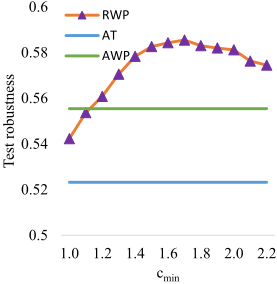
- (a) Importance of minimum loss value cmin
- (b) Impacts of step number K2
- (c) Effect of RWP on adversarial robustness and robust overfitting
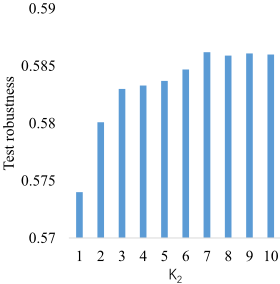
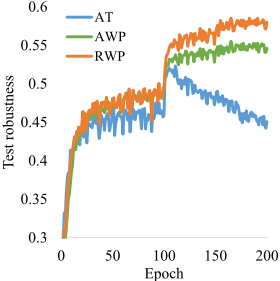
Figure 2: The ablation study experiments on CIFAR-10.
range of baseline methods, which verifies that RWP is effective in general and improves adversarial robustness reliably rather than improper tuning of hyper-parameters of attacks, gradient obfuscation or masking.
5.3 Ablation Studies
In this part, we investigate the impacts of algorithmic components using AT-RWP on PreAct ResNet-18 under L∞ threat model following the same setting in section 5.1.
The Importance of Minimum Loss Value. We verify the effectiveness of minimum loss value cmin, by comparing the performance of models trained using different weight perturbation schemes: 1) AT: standard adversarial training without weight perturbation (equivalent to cmin = 0); 2) AWP: weight perturbation generated via outer maximization in Eq.(1) (equivalent to cmin = ∞); 3) RWP: weight perturbation generated using the proposed robust strategy with different cmin values. All other hyper-parameters are kept exactly the same other than the perturbation scheme used. The results are summarized in Figure 2(a). It is observed that the test robustness of RWP model first increases and then decreases as the minimum loss value increases, and the best test robustness is obtained at cmin = 1.7. It is evident that RWP with a wide range of cmin outperforms both AT and AWP methods, demonstrating its effectiveness. Furthermore, as it is the major component that is different from the AWP pipeline, this result suggests that the proposed LSC constraints is the main contributor to the improved adversarial robustness.
The Impact of Step Number. We further investigate the effect of step number K2, by comparing the performances of model trained using different perturbation steps. The step number K2 for RWP varies from 1 to 10. The results are shown in Figure 2(b). As expected, when K2 is small, increasing K2 leads higher test robustness. WhenK2 increases from 7 to 10, the performance is flat, which suggests that the generated weight perturbation is sufficient to comprehensively avoid robust overfitting. Note that extra iterations will not bring computational overhead when the classification loss of adversarial examples exceeds minimum loss value cmin, as shown in Algorithm 1. Therefore, we uniformly use K2 = 10 in our implementation.
Effect on Adversarial Robustness and Robust Overfitting. We then visualize the learning curves of AT, AWP and RWP, which are summarized in Figure 2(c). It is observed that the test robustness of RWP model continues to increase as the training progresses. In addition, RWP outperforms AWPwith a clear margin in the later stage of training. Such observations exactly reflect the nature of our approach which aims to prevent robust overfitting as well as boost the robustness of adversarial training.
6 Conclusion
In this paper, we proposed a criterion, Loss Stationary Condition (LSC) for constrained weight perturbation. The proposed criterion provides a new understanding of robust overfitting. Based on LSC, we found that elimination of robust overfitting and higher robustness of adversarial training can be achieved by weight perturbation on adversarial examples with small classification loss, rather than adversarial examples with large classification loss. Following this, we proposed a Robust Weight Perturbation (RWP) strategy to regulate the extent of weight perturbation. Comprehensive experiments show that RWP is generic and can improve the stateof-the-art adversarial robustness across different adversarial training approaches, network architectures, threat models and benchmark datasets.
Acknowledgements
This work is supported in part by Beijing Natural Science Foundation (19L2040), NSFC Young Scientists Fund No. 62006202, Guangdong Basic and Applied Basic Research Foundation No. 2022A1515011652, and Science and Technology Innovation 2030 -"Brain Science and Brain-like Research" Major Project (No. 2021ZD0201402 and No. 2021ZD0201405).
@inproceedings{ijcai2022p512,
  title     = {Robust Weight Perturbation for Adversarial Training},
  author    = {Yu, Chaojian and Han, Bo and Gong, Mingming and Shen, Li and Ge, Shiming and Bo, Du and Liu, Tongliang},
  booktitle = {Proceedings of the Thirty-First International Joint Conference on
               Artificial Intelligence, {IJCAI-22}},
  publisher = {International Joint Conferences on Artificial Intelligence Organization},
  editor    = {Luc De Raedt},
  pages     = {3688--3694},
  year      = {2022},
  month     = {7},
  note      = {Main Track},
  doi       = {10.24963/ijcai.2022/512},
  url       = {https://doi.org/10.24963/ijcai.2022/512},
}
TY - CPAPER TI - Robust Weight Perturbation for Adversarial Training AU - Yu, Chaojian AU - Han, Bo AU - Gong, Mingming AU - Shen, Li AU - Ge, Shiming AU - Bo, Du AU - Liu, Tongliang T2 - Proceedings of the Thirty-First International Joint Conference on Artificial Intelligence, IJCAI-22 PB - International Joint Conferences on Artificial Intelligence Organization PY - 2022 SP - 3688 EP - 3694 DO - 10.24963/ijcai.2022/512 UR - https://doi.org/10.24963/ijcai.2022/512 ER -Copied
Machine-readable versions of this paper, for tools and AI agents:





