
Tracking Different Ant Species: An Unsupervised Domain Adaptation Framework and a Dataset for Multi-object Tracking
Proceedings of the Thirty-Second International Joint Conference on Artificial Intelligence. Main Track. Pages 546-554.
https://doi.org/10.24963/ijcai.2023/61
Keywords
- Computer Vision: CV: Applications
- Computer Vision: CV: Transfer, low-shot, semi- and un- supervised learning
- Computer Vision: CV: Motion and tracking
Abstract
Tracking individuals is a vital part of many experiments conducted to understand collective behaviour. Ants are the paradigmatic model system for such experiments but their lack of individually distinguishing visual features and their high colony densities make it extremely difficult to perform reliable racking automatically. Additionally, the wide diversity of their species' appearances makes a generalized approach even harder. In this paper, we propose a data-driven multi-object tracker that, for the first time, employs domain adaptation to achieve the required generalisation. This approach is built upon a joint-detection-and-tracking framework that is extended by a set of domain discriminator modules integrating an adversarial training strategy in addition to the tracking loss. In addition to this novel domain-adaptive tracking framework, we present a new dataset and a benchmark for the ant tracking problem. The dataset contains 57 video sequences with full trajectory annotation, including 30k frames captured from two different ant species moving on different background patterns. It comprises 33 and 24 sequences for source and target domains, respectively. We compare our proposed framework against other domain-adaptive and non-domain-adaptive multi-object tracking baselines using this dataset and show that incorporating domain adaptation at multiple levels of the tracking pipeline yields significant improvements. The code and the dataset are available at https://github.com/chamathabeysinghe/da-tracker.
- [Bae and Yoon, 2014] Seung-Hwan Bae and Kuk-Jin Yoon. Robust online multi-object tracking based on tracklet con- fidence and online discriminative appearance learning. In Proceedings of the IEEE conference on computer vision and pattern recognition, pages 1218-1225, 2014.
- [Bergmann et al., 2019] Philipp Bergmann, Tim Meinhardt, and Laura Leal-Taixe. Tracking without bells and whistles. In Proceedings of the IEEE/CVF International Conference on Computer Vision, pages 941-951, 2019.
- [Bernardin and Stiefelhagen, 2008] Keni Bernardin and Rainer Stiefelhagen. Evaluating multiple object tracking performance: the clear mot metrics. EURASIP Journal on Image and Video Processing, 2008:1-10, 2008.
- [Bewley et al., 2016] Alex Bewley, Zongyuan Ge, Lionel Ott, Fabio Ramos, and Ben Upcroft. Simple online and re- altime tracking. In 2016 IEEE international conference on image processing (ICIP), pages 3464-3468. IEEE, 2016.
- [Boenisch et al., 2018] Franziska Boenisch, Benjamin Rose- mann, Benjamin Wild, David Dormagen, Fernando Wario, and Tim Landgraf. Tracking all members of a honey bee colony over their lifetime using learned models of corre- spondence. Frontiers in Robotics and AI, 5:35, 2018.
- [Bousmalis et al., 2016] Konstantinos Bousmalis, George Trigeorgis, Nathan Silberman, Dilip Krishnan, and Du- mitru Erhan. Domain separation networks. Advances in neural information processing systems, 29, 2016.
- [Carion et al., 2020] Nicolas Carion, Francisco Massa, Gabriel Synnaeve, Nicolas Usunier, Alexander Kirillov, and Sergey Zagoruyko. End-to-end object detection with transformers. In European conference on computer vision, pages 213-229. Springer, 2020.
- [Chen et al., 2014] Jianxu Chen, Cameron W Harvey, Mark S Alber, and Danny Z Chen. A matching model based on earth mover's distance for tracking myxococ- cus xanthus. In International Conference on Medical Image Computing and Computer-Assisted Intervention, pages 113-120. Springer, 2014.
- [Chen et al., 2018] Yuhua Chen, Wen Li, Christos Sakaridis, Dengxin Dai, and Luc Van Gool. Domain adaptive faster r-cnn for object detection in the wild. In Proceedings of the IEEE conference on computer vision and pattern recogni- tion, pages 3339-3348, 2018.
- [Choi, 2015] Wongun Choi. Near-online multi-target track- ing with aggregated local flow descriptor. In Proceedings of the IEEE international conference on computer vision, pages 3029-3037, 2015.
- [Du et al., 2018] Dawei Du, Yuankai Qi, Hongyang Yu, Yi- fan Yang, Kaiwen Duan, Guorong Li, Weigang Zhang, Qingming Huang, and Qi Tian. The unmanned aerial ve- hicle benchmark: Object detection and tracking. In Pro- ceedings of the European conference on computer vision (ECCV), pages 370-386, 2018.
- [Feichtenhofer et al., 2017] Christoph Feichtenhofer, Axel Pinz, and Andrew Zisserman. Detect to track and track to detect. In Proceedings of the IEEE international con- ference on computer vision, pages 3038-3046, 2017.
- [Gaidon and Vig, 2015] Adrien Gaidon and Eleonora Vig. Online domain adaptation for multi-object tracking. arXiv preprint arXiv:1508.00776, 2015.
- [Ganin and Lempitsky, 2015] Yaroslav Ganin and Victor Lempitsky. Unsupervised domain adaptation by backprop- agation. In International conference on machine learning, pages 1180-1189. PMLR, 2015.
- [Geiger et al., 2012] Andreas Geiger, Philip Lenz, and Raquel Urtasun. Are we ready for autonomous driving? the kitti vision benchmark suite. In 2012 IEEE conference on computer vision and pattern recognition, pages 3354- 3361. IEEE, 2012.
- [Ghifary et al., 2015] Muhammad Ghifary, W Bastiaan Kleijn, Mengjie Zhang, and David Balduzzi. Domain generalization for object recognition with multi-task autoencoders. In Proceedings of the IEEE international conference on computer vision, pages 2551-2559, 2015.
- [He et al., 2017] Kaiming He, Georgia Gkioxari, Piotr Dollár, and Ross Girshick. Mask r-cnn. In Proceedings of the IEEE international conference on computer vision, pages 2961-2969, 2017.
- [Hölldobler et al., 1990] Bert Hölldobler, Edward O Wilson, et al. The ants. Harvard University Press, 1990.
- [Huang et al., 2022] Wei-Jie Huang, Yu-Lin Lu, Shih-Yao Lin, Yusheng Xie, and Yen-Yu Lin. Aqt: Adversarial query transformers for domain adaptive object detection. In 31st International Joint Conference on Artificial Intel- ligence, IJCAI 2022, pages 972-979. International Joint Conferences on Artificial Intelligence, 2022. IJCAI
- [Imirzian et al., 2019] Natalie Imirzian, Yizhe Zhang, Christoph Kurze, Raquel G Loreto, Danny Z Chen, and David P Hughes. Automated tracking and analysis of ant trajectories shows variation in forager exploration. Scientific reports, 9(1):1-10, 2019.
- [Jiang et al., 2020] Pin Jiang, Aming Wu, Yahong Han, Yun- feng Shao, Meiyu Qi, and Bingshuai Li. Bidirectional ad- versarial training for semi-supervised domain adaptation. In IJCAI, pages 934-940, 2020. IJCAI
- [Kumar et al., 2020] SV Aruna Kumar, Ehsan Yaghoubi, Abhijit Das, BS Harish, and Hugo Proenc ¸a. The p-destre: A fully annotated dataset for pedestrian detection, track- ing, and short/long-term re-identification from aerial de- vices. IEEE Transactions on Information Forensics and Security, 16:1696-1708, 2020.
- [Lan et al., 2016] Long Lan, Dacheng Tao, Chen Gong, Naiyang Guan, and Zhigang Luo. Online multi-object tracking by quadratic pseudo-boolean optimization. In IJ- CAI, pages 3396-3402, 2016.
- [Leal-Taixé et al., 2011] Laura Leal-Taixé, Gerard Pons- Moll, and Bodo Rosenhahn. Everybody needs somebody: Modeling social and grouping behavior on a linear pro- gramming multiple people tracker. In 2011 IEEE inter- national conference on computer vision workshops (ICCV workshops), pages 120-127. IEEE, 2011.
- [Liu et al., 2020] Qiankun Liu, Qi Chu, Bin Liu, and Neng- hai Yu. Gsm: Graph similarity model for multi-object tracking. In IJCAI, pages 530-536, 2020. IJCAI
- [Long et al., 2017] Mingsheng Long, Han Zhu, Jianmin Wang, and Michael I Jordan. Deep transfer learning with joint adaptation networks. In International conference on machine learning, pages 2208-2217. PMLR, 2017.
- [Luiten et al., 2021] Jonathon Luiten, Aljosa Osep, Patrick Dendorfer, Philip Torr, Andreas Geiger, Laura Leal-Taixé, and Bastian Leibe. Hota: A higher order metric for evalu- ating multi-object tracking. International journal of com- puter vision, 129(2):548-578, 2021.
- [Meinhardt et al., 2022] Tim Meinhardt, Alexander Kirillov, Laura Leal-Taixe, and Christoph Feichtenhofer. Track- former: Multi-object tracking with transformers. In Pro- ceedings of the IEEE/CVF Conference on Computer Vision and Pattern Recognition, pages 8844-8854, 2022.
- [Milan et al., 2016] Anton Milan, Laura Leal-Taixé, Ian Reid, Stefan Roth, and Konrad Schindler. Mot16: A benchmark for multi-object tracking. arXiv preprint arXiv:1603.00831, 2016.
- [Naiser et al., 2018] Filip Naiser, Matěj Šmíd, and Jiří Matas. Tracking and re-identification system for multiple laboratory animals. In Visual observation and analysis of vertebrate and insect behavior workshop at international conference on pattern recognition (ICPR), 2018.
- [Oh et al., 2009] Songhwai Oh, Stuart Russell, and Shankar Sastry. Markov chain monte carlo data association for multi-target tracking. IEEE Transactions on Automatic Control, 54(3):481-497, 2009.
- [Pérez-Escudero et al., 2014] Alfonso Pérez-Escudero, Julián Vicente-Page, Robert C Hinz, Sara Arganda, and Gonzalo G De Polavieja. idtracker: tracking individuals in a group by automatic identification of unmarked animals. Nature methods, 11(7):743-748, 2014.
- [Ray and Stopfer, 2022] Subhasis Ray and Mark A Stopfer. Argos: A toolkit for tracking multiple animals in complex visual environments. Methods in Ecology and Evolution, 13(3):585-595, 2022.
- [Ren et al., 2015] Shaoqing Ren, Kaiming He, Ross Gir- shick, and Jian Sun. Faster r-cnn: Towards real-time ob- ject detection with region proposal networks. Advances in neural information processing systems, 28, 2015.
- [Rezatofighi et al., 2015] Seyed Hamid Rezatofighi, Anton Milan, Zhen Zhang, Qinfeng Shi, Anthony Dick, and Ian Reid. Joint probabilistic data association revisited. In Proceedings of the IEEE international conference on com- puter vision, pages 3047-3055, 2015.
- [Ristani et al., 2016] Ergys Ristani, Francesco Solera, Roger Zou, Rita Cucchiara, and Carlo Tomasi. Performance mea- sures and a data set for multi-target, multi-camera track- ing. In European conference on computer vision, pages 17-35. Springer, 2016.
- [Romero-Ferrero et al., 2019] Francisco Romero-Ferrero, Mattia G Bergomi, Robert C Hinz, Francisco JH Heras, and Gonzalo G De Polavieja. Idtracker. ai: tracking all individuals in small or large collectives of unmarked animals. Nature methods, 16(2):179-182, 2019.
- [Sadeghian et al., 2017] Amir Sadeghian, Alexandre Alahi, and Silvio Savarese. Tracking the untrackable: Learning to track multiple cues with long-term dependencies. In Proceedings of the IEEE international conference on com- puter vision, pages 300-311, 2017.
- [Saito et al., 2019] Kuniaki Saito, Yoshitaka Ushiku, Tat- suya Harada, and Kate Saenko. Strong-weak distribution alignment for adaptive object detection. In Proceedings of the IEEE/CVF Conference on Computer Vision and Pat- tern Recognition, pages 6956-6965, 2019.
- [Saleh et al., 2021] Fatemeh Saleh, Sadegh Aliakbarian, Hamid Rezatofighi, Mathieu Salzmann, and Stephen Gould. Probabilistic tracklet scoring and inpainting for multiple object tracking. In Proceedings of the IEEE/CVF Conference on Computer Vision and Pattern Recognition, pages 14329-14339, 2021.
- [Schulter et al., 2017] Samuel Schulter, Paul Vernaza, Wongun Choi, and Manmohan Chandraker. Deep network flow for multi-object tracking. In Proceedings of the IEEE Conference on Computer Vision and Pattern Recognition, pages 6951-6960, 2017.
- [Sun et al., 2020] Peize Sun, Jinkun Cao, Yi Jiang, Rufeng Zhang, Enze Xie, Zehuan Yuan, Changhu Wang, and Ping Luo. Transtrack: Multiple object tracking with trans- former. arXiv preprint arXiv:2012.15460, 2020.
- [Sun et al., 2022] Peize Sun, Jinkun Cao, Yi Jiang, Zehuan Yuan, Song Bai, Kris Kitani, and Ping Luo. Dancetrack: Multi-object tracking in uniform appearance and diverse motion. In Proceedings of the IEEE/CVF Conference on Computer Vision and Pattern Recognition, pages 20993- 21002, 2022.
- [Wojke et al., 2017] Nicolai Wojke, Alex Bewley, and Di- etrich Paulus. Simple online and realtime tracking with a deep association metric. In 2017 IEEE international conference on image processing (ICIP), pages 3645-3649. IEEE, 2017.
- [Wu et al., 2022] Meihong Wu, Xiaoyan Cao, Xiaoyu Cao, and Shihui Guo. A dataset of ant colonies motion trajecto- ries in indoor and outdoor scenes for social cluster behav- ior study. arXiv preprint arXiv:2204.04380, 2022.
- [Yan et al., 2017] Hongliang Yan, Yukang Ding, Peihua Li, Qilong Wang, Yong Xu, and Wangmeng Zuo. Mind the class weight bias: Weighted maximum mean discrepancy for unsupervised domain adaptation. In Proceedings of the IEEE conference on computer vision and pattern recogni- tion, pages 2272-2281, 2017.
- [Zhang et al., 2021] Jingyi Zhang, Jiaxing Huang, Zhipeng Luo, Gongjie Zhang, and Shijian Lu. Da-detr: Domain adaptive detection transformer by hybrid attention. arXiv preprint arXiv:2103.17084, 2021.
References were extracted automatically from the PDF and may contain errors.
Full text extracted automatically from the PDF; figures, tables and equations may differ. The PDF is the version of record.
1 Introduction
Many biologists and ecologists are interested in understanding social insect behaviours, in particular, that of ants to gain insights into how social systems collaborate in nature. This important research is unfortunately slowed down by the difficulty of automatically tracking ants of many different species in very diverse experimental environments.
Compared to other multi-object tracking (MOT) problems in computer vision, ant tracking imposes unique challenges; individual ants are visually extremely similar and move in highly crowded environments with complex interactions. This leads to a significant level of occlusions, overlapping movements etc. Furthermore, ants comprise a great variety of species with broadly differing appearances between species. The main problem for data-driven approaches arising from this diversity is the transferability between species. State-ofthe-art data-driven tracking methods such as [Meinhardt et al., 2022; Sun et al., 2020] trained on a dataset of a specific ant species and environment do not perform well on datasets with different ant species and environments, as shown in the experiment section of this paper. Consequently, the most popular approaches used for ant tracking rely on model-based detection and tracking techniques [P´erez-Escudero et al., 2014; Naiser et al., 2018]. To the best of our knowledge, no species-diverse large-scale dataset exists that can be used for training and comparing state-of-the-art data-driven detection and tracking approaches, e.g., [Ren et al., 2015; Meinhardt et al., 2022; Sun et al., 2020].
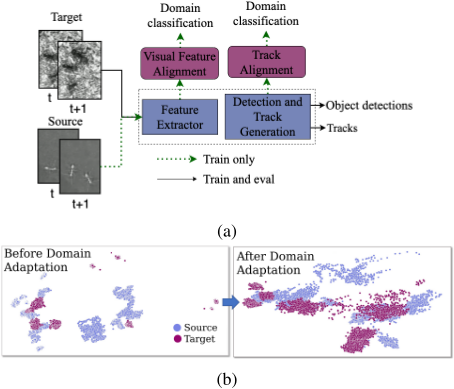
In this paper, we propose a data-driven domain adaptive multi-object tracking framework, named DA-Tracker, which is capable of transferring knowledge from training with one ant species (source) to another ant species in a different environment (target). To the best of our knowledge, our proposed approach is the first MOT framework to tackle this unsupervised domain adaptation problem in an end-to-end trainable manner. Fig. 1 shows a high-level design of the proposed framework and its performance in unifying the source and target feature representation.
Our proposed end-to-end multi-object tracking approach builds upon [Meinhardt et al., 2022] and extends this to perform domain adaptation. Our domain adaptation modules are based on adversarial training strategies that generate similarity between the encoded input and decoded output representations from source and target data by enforcing highly overlapping feature distributions. To this end, domain adaptation is applied to image level features and track level information separately. To train DA-Tracker, we use two different categories of losses: 1) supervised losses, used for source domain data only, and 2) discriminator losses, used for both source and target domain data. The multi-object tracking module learns to localize objects and generate tracks using the supervised losses from the annotated outputs available in the source data. The three discriminators, connected to the intermediate encoding and decoding layers in the tracking pipeline, ensure that the tracking module generates highly similar feature distributions for source and target domains data across the input and output representations.
As a second contribution, we introduce and make publicly available a new large-scale dataset for ant tracking with unsupervised domain adaptation in realistic experimental setups. We use this to evaluate our framework in this paper. Our dataset includes 57 video sequences (more than 30K image frames) captured in a laboratory environment from two ant species Oecophylla smaragdina (weaver ants) and Camponotus aeneopilosus (carpenter ants) with very different appearance and behaviour moving on different background structures (ranging from plain to grassy backgrounds) under various ant population density, lighting and the camera zoom conditions (Fig. 3). The dataset is provided with about 700K and 2K high-quality bounding boxes and tracks, respectively. To establish a standard benchmark, we divide both the target and source domain data into three splits: training, validation and test. The training split comprises about 50% of data; test and validation about 25% each. To evaluate our method, we adopt standard multi-object tracking metrics such as MOTClear [Bernardin and Stiefelhagen, 2008], IDF [Ristani et al., 2016] and HOTA [Luiten et al., 2021].
In summary, our main contributions are to: (1) propose an unsupervised domain adaptation method for multi-object tracking in an end-to-end trainable framework, (2) introduce a large-scale ant dataset and benchmark for unsupervised domain adaptation in multi-object tracking, (3) comprehensively evaluate and compare our framework against the stateof-the-art detection based and data-driven MOT approaches.
2 RelatedWork
Multi-object tracking in computer vision: In multiobject tracking problems, data-driven approaches have shown state-of-the-art performance on many publicly available MOT datasets such as [Milan et al., 2016; Geiger et al., 2012]. A main paradigm in multi-object tracking is tracking-bydetection where the problem is dived into a two-step process: (1) object detection and (2) track generation. In the first step, a deep learning-based object detector, e.g., [Ren et al., 2015; He et al., 2017; Carion et al., 2020], is used to localize all the objects of interest in all the frame sequences. Next, a tracking technique is applied to generate tracks, e.g., a filtering-based framework [Bewley et al., 2016; Wojke et al., 2017; Rezatofighi et al., 2015], an optimisationbased technique [Schulter et al., 2017; Lan et al., 2016] or another approach [Oh et al., 2009; Choi, 2015] using a similarity/distance measure between detection and hypothetical tracks, that is generally based on appearance information [Wojke et al., 2017; Liu et al., 2020], motion information [Leal-Taix´e et al., 2011; Saleh et al., 2021] or both [Sadeghian et al., 2017; Bae and Yoon, 2014].
A different multi-object tracking paradigm that has recently become popular is joint-detection-and-tracking [Meinhardt et al., 2022; Sun et al., 2020; Bergmann et al., 2019; Feichtenhofer et al., 2017]. Joint-detection-and-tracking performs object detection and tracking simultaneously in a single step. Integrating everything into a single step allows us to efficiently exchange information between object detection and tracking. Our proposed model is built on top of this category of MOT approaches. In this paper, we use Trackformer [Meinhardt et al., 2022] as an end-to-end trainable MOT framework as our baseline. Trackformer [Meinhardt et al., 2022] is a joint-detection-and-tracking method inspired by the transformer object detector, DETR [Carion et al., 2020]. Trackformer has two object detectors working on consecutive frames. It learns to initialize new tracks (i.e. new detected objects), and terminate the exiting tracks or associate them to the next frame by predicting their next state (i.e. bounding box and confidence scores) in an auto-regressive scheme between two consecutive frames.
Ant tracking: Most existing ant tracking frameworks follow model-based approaches [P´erez-Escudero et al., 2014; Naiser et al., 2018]. A popular monitoring tool used for ant tracking is iDTracker. As originally described in [P´erezEscudero et al., 2014], this tool generates object detections using colour intensity thresholds and assigns a unique ID using a classification network. The original approach is modelbased and does not need training data. It can efficiently work under simple tracking scenarios. However, it fails to track reliably in highly crowded environments. We note that a more recent extension, termed iDTracker.ai, uses deep learning (CNNs) for individual identification [Romero-Ferrero et al., 2019]. This approach relies on individuals being sufficiently distinguishable and no results for ants have been published in [Romero-Ferrero et al., 2019]. Another tracking-bydetection approach using deep learning for object detection (Mask R-CNN [He et al., 2017]) is described in [Imirzian et al., 2019]. This approach uses Earth Mover's Distance (EMD) [Chen et al., 2014] to link detections into tracks. The performance of these tracking-by-detection approaches heavily relies on the supervised object detectors which need to be re-trained for every experimental setting.
Unsupervised domain adaptation: Unsupervised domain adaptation is a process of generalizing a model to work on other input data than the labeled training data. There are many approaches to unsupervised domain adaptation, e.g. adversarial-based methods [Saito et al., 2019; Chen et al., 2018], discrepancy-based methods [Yan et al., 2017; Long et al., 2017], and reconstruction-based methods [Bousmalis et al., 2016; Ghifary et al., 2015]. Domain adaptation is a very well-studied problem in a few machine learning/computer vision tasks such as image classification [Ganin and Lempitsky, 2015; Jiang et al., 2020] and object detection [Saito et al., 2019; Chen et al., 2018; Zhang et al., 2021; Huang et al., 2022]. However, it has been barely extended to higher-level tasks, such as multi-object tracking, due to the complexity of such problem.
Many domain adaptation methods [Chen et al., 2018; Saito et al., 2019; Zhang et al., 2021; Huang et al., 2022] in object detection are adversarial-based methods that train image domain classifiers alongside the object detector. In adversarial-based domain adaptation, model generalization is achieved by a discriminator forcing the feature extractor to translate feature representations for different domain data into one common distribution. [Chen et al., 2018] have proposed a Faster R-CNN with an adversarial domain adaptive approach. In this method, a Faster R-CNN connects to domain classification layers at two levels: the image level and the instance level, and translates features into a common distribution. [Saito et al., 2019] propose improvements to this DA-Faster R-CNN method by introducing a new loss function that estimates a cost based on the classification's difficulty.
Only a few studies of domain adaptation in the multi-object tracking exist [Gaidon and Vig, 2015]. One way to improve tracking's accuracy for an unseen domain is to use a domainadaptive object detector followed by a model-based tracking approach. The baseline models to which we compare in this study work in this way. In contrast to this and previous work, we apply domain adaptation techniques on both object detection and track generation in a data-driven multi-object tracker.
Dataset and benchmark: Several large-scale standard datasets and benchmarks for multi-object tracking problems exist, e.g. for pedestrian/human tracking [Milan et al., 2016; Kumar et al., 2020; Sun et al., 2022], vehicle tracking [Geiger et al., 2012; Du et al., 2018], and animal tracking [Ray and Stopfer, 2022]. Having these public datasets and benchmarks helps to develop state-of-the-art solutions in respective fields.
For ant tracking, we have only a few publicly available datasets [Imirzian et al., 2019; Wu et al., 2022]. The dataset from [Wu et al., 2022] is relatively small with about 5k images. The dataset published in [Imirzian et al., 2019] has 20K annotated images but only sparse object detections with 1.8 average detections per frame. Due to this sparseness we cannot observe complex motions and frequently overlapping tracks. Both of these datasets contain videos from only one ant species. Our proposed large-scale dataset has two ant species and higher density of 25.6 detections per frames allowing us to assess complex tracking scenarios. Furthermore, we establish standard benchmark tasks for this dataset.
3 Framework
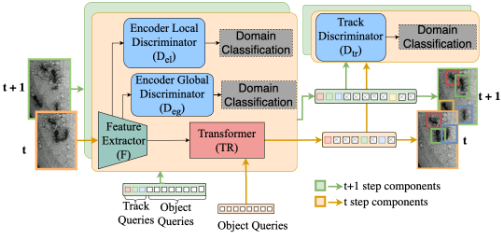
We present an unsupervised domain adaptation method for a multi-object tracking network that translates source and target image features into a common distribution. Mapping the target feature distribution to the source distribution, we can expect a tracker trained only on the source domain tracker to retain its performance in the target domain. Our proposed approach relies on several adversarial losses for classifying image-level and track-level features between source and target data. As depicted in Fig. 2, our adversarial approach relies on three discriminators (blue boxes): two of these operate on the encoded visual features, while the third one operates on the decoded features representing the outputs/trajectories.
3.1 Multi-Object Tracker
Our approach is based on the recently proposed end-to-end multi-object tracker, known as Trackformer [Meinhardt et al., 2022]. In this framework, the tracker component uses two extended object detectors that work on consecutive frames and links the individual predictions using track queries. These track queries are essentially a summary of information about object detections in the previous frame that is passed to a predictor for the current frame. To train the tracker on the source domain, we use the supervised loss, LMOT,S, suggested by [Meinhardt et al., 2022], which is a combination of losses for track initiation and localization for new objects and state prediction for the existing ones.
3.2 Domain Adaptation in Layers
To extend this tracking framework for unsupervised domainadaption, we adopt the adversarial training strategy by integrating three different discriminators, trained simultaneously with the multi-object tracker. These discriminators enforce similarity between the encoded/decoded features from source and domain data. Their details are elaborated below:
Encoded visual feature alignment: Feature alignment works at frame-level feature extraction layers in the backbone F. One discriminator (Del in Figure 2) operates on local features, the other one (Deg) on global features (e.g. backgrounds, scene layouts). At the global level, domainspecific attributes may vary significantly, and attempts to align them may negatively impact model performance [Saito et al., 2019]. By incorporating two discriminators, the degree of feature alignment can be tailored to the specific layer.
Del takes its input of height H and width W from the backbone layer (F ′ ) and produces a domain classification prediction of the same shape. A pixel level loss is estimated from this prediction for each source domain frame, xSi , and target domain frame, xTi , to establish a strong alignment cost for local features. This local feature classification cost, Llocal is calculated over two consecutive time steps, t = 1, 2:
Deg similarly predicts the domain category at the global feature level (Equation 6). This loss, a modified version of cross-entropy loss, assigns a higher value for hard-to-classify examples [Saito et al., 2019]. Equation 4 and 5 calculate this loss for source domain and target domain respectively.
Our ablation experiments provided in Sec. 5 show that the visual feature alignment by itself already yields a significant improvement in the tracking performance for the target domain data, compared to the supervised baseline. This performance improvement is mainly due to better object detection in the target domain data. To compensate domain shift between the outputs (tracks), we also add a track-level alignment component by an additional track discriminator.
Track level alignment: We introduce a track discriminator, Dtr at the final output layer of the Transformer (TR) to compensate the domain shift between the output (track) distributions. The output from the transformer, qi,j contains an embedding of both track queries and object queries. These are used as the initialisation for the continuation of the track. Domain alignment at the track level thus addresses track continuation and track termination.
The track discriminator, Dtr, ensures that the decoded (output-level) features from the source and domain data are not distinguishable by classifying their domain individually in an adversarial learning setting using the following losses:
3.3 End-to-End Trainable Domain Adaptation
Finally, Equation 10 combines the loss of all three discriminators with the supervised tracking loss, LMOT,S. To train the model with all the losses together in an end-to-end trainable fashion we integrate a gradient reverse layer [Ganin and Lempitsky, 2015] between the discriminators and the tracker. The gradient reverse layer introduces negative feedback when the source and target domains features are easily distinguishable. The rationale is that easy discrimination can be assumed to be detrimental to the domain transfer of tracking. In this way the model can be trained for multiple objectives simultaneously.
4 Dataset and Benchmark
4.1 Annotated Dataset
Our benchmark dataset contains 57 video sequences recorded in a standard laboratory environment in the context of a real biological experiment. It comprises 33 videos in the source domain and 24 videos in the target domain for a total of 36k frames and 700k object detections. Each video contains between 10-50 ants on average. The videos were recorded with different backgrounds, zoom levels and lighting conditions. Table 1 details the dataset metrics. Our dataset comprises videos of two very different species of ants: Weaver
| Source | Target | |||||||
|---|---|---|---|---|---|---|---|---|
| Train | Val | Test | All | Train | Val | Test | All | |
| Tot. videos | 20 | 6 | 7 | 33 | 12 | 6 | 6 | 24 |
| Tot. frames | 12200 | 3440 | 4160 | 19800 | 8200 | 4100 | 4100 | 16400 |
| Tot. detections | 286K | 82K | 103K | 471K | 135K | 53K | 60K | 249K |
| Tot. tracks | 635 | 217 | 199 | 1051 | 455 | 215 | 203 | 873 |
| Avg. track len. | 450.0 | 379.8 | 518.7 | 448.5 | 297.0 | 249.8 | 298.5 | 285.7 |
(c) Source domain samples
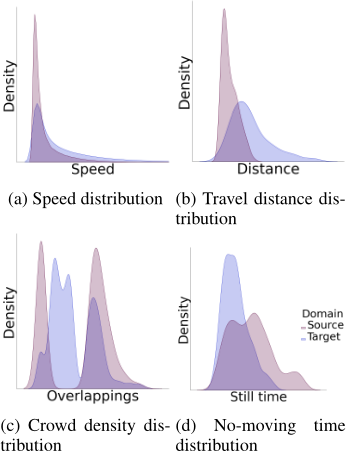
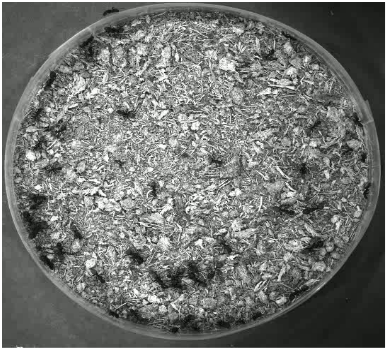
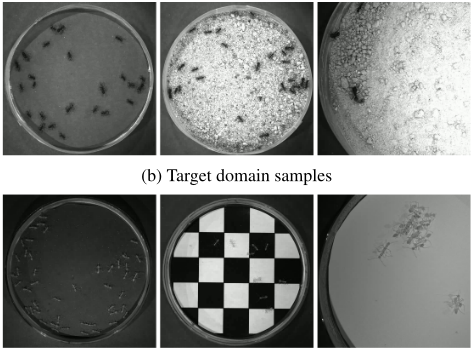
Figure 4: Distribution difference in target and source domain. Here we illustrate behavioural pattern difference between two ant species.
ants (Oecophylla smaragdina) and Carpenter ants (Camponotus aeneopilosus) [H¨olldobler et al., 1990]. As shown in Figs. 3 and 4, these two ant species have clearly distinguishable physical appearances and behavioural patterns, making this dataset a proper practical benchmark for domain adaptation in multi-object tracking.
We produced the ground-truth track using a two-step process: (1) a simple tracking algorithm was used to produce a tentative, partial and noisy ground truth (2) all these initial annotations were manually corrected by a human expert.
For the initial phase, we first trained a Faster R-CNN detector [Ren et al., 2015] using the detected ant locations by an off-the-shelf QR tracker [Boenisch et al., 2018] on an external dataset including ants tagged with micro-QR codes. We then used this trained detector on a second set of videos including untagged ants, i.e. our final benchmark dataset. Next, a basic multi-object tracking approach (Kalman filtering followed by Hungarian matching), was applied to link detections between successive frames and to produce the initial track annotations. Due to the fact that the object detector was trained for QR-tagged ants and due to the simplistic tracking linking, this "pseudo ground-truth" is obviously not useable as a real ground-truth. Thus, in the second phase, the "pseudo ground-truth" was manually and carefully corrected by human inspection to generate a fully valid ground-truth.
4.2 Benchmark
Source and target domains: The main application of our benchmark is to assess multi-object tracking frameworks in an unsupervised domain adaptation experimental setting. For this benchmark, we consider the weaver ant videos as the source domain and the carpenter ant videos as the target domain data, respectively.
Train, validation and test split: We divided both the target and source domain data into three splits: training, validation and test. The training split comprises about 50% of data; test and validation about 25% each. We tried our best to ensure the statistics of each split reflects the similar distribution in the terms of background types, zoom levels, density of ants etc. We will use the training and validation sets of the source (inputs and their annotations) and target domains (inputs only) for optimizing the model parameters and hyperparameter tuning, respectively. The final results are evaluated on the target domain's test split.
Evaluation metric: Tracking performances in the biological/ecological literature are reported in a variety of different ways that do not allow direct comparison. To overcome this, we adopt standards of the multi-object tracking literature: MOTA, HOTA and IDF1. In addition to these, we include other key metrics like IDSW, MT, ML in the benchmark. An explanation of the full details and intricacies of these metrics is beyond the scope of this paper. Full details are given in [Luiten et al., 2021; Ristani et al., 2016; Bernardin and Stiefelhagen, 2008]. In broad sketch terms, tracking requires so solve two sub-tasks (object localization and detection association) and these metrics emphasize the performance on these two sub-tasks to different extents. IDF1 is biased toward tracking accuracy, while MOTA is biased toward detection accuracy. HOTA provides an overall assessment of both of these factors.
| Detector | Tracker | MOTA | IDF1 | HOTA | MT | ML | Frag | FP(/frame) | ID Sw. |
|---|---|---|---|---|---|---|---|---|---|
| DETR [Carion et al., 2020]† | SORT [Bewley et al., 2016] | -3.759 | 0.107 | 0.203 | 54 | 69 | 673 | 61.75 | 582 |
| DETR [Carion et al., 2020]† | EMD tracker [Imirzian et al., 2019] | -3.830 | 0.110 | 0.205 | 61 | 65 | 731 | 63.20 | 640 |
| Transtrack [Sun et al., 2020]† (joint detection and tracking ) | -3.606 | 0.066 | 0.132 | 60 | 84 | 3210 | 59.76 | 2546 | |
| Trackformer [Meinhardt et al., 2022]† (joint detection and tracking ) | -1.02 | 0.187 | 0.262 | 57 | 118 | 1148 | 20.87 | 1351 | |
| DA FRCNN [Saito et al., 2019]‡ | SORT [Bewley et al., 2016] | 0.216 | 0.303 | 0.288 | 38 | 57 | 1874 | 4.53 | 1086 |
| DA FRCNN [Saito et al., 2019]‡ | EMD tracker [Imirzian et al., 2019] | 0.225 | 0.333 | 0.316 | 52 | 31 | 3402 | 5.79 | 1223 |
| Adapt DETR‡ | SORT [Bewley et al., 2016] | 0.411 | 0.254 | 0.284 | 96 | 40 | 1851 | 2.70 | 1723 |
| Adapt DETR‡ | EMD tracker [Imirzian et al., 2019] | 0.413 | 0.275 | 0.305 | 112 | 21 | 2513 | 4.05 | 2085 |
| DA-Tracker‡ (joint detection and tracking ) | 0.493 | 0.494 | 0.433 | 42 | 42 | 755 | 1.261 | 495 | |
| Transtrack [Sun et al., 2020]†† (joint detection and tracking ) | 0.918 | 0.584 | 0.584 | 200 | 1 | 819 | 0.491 | 823 | |
| Trackformer [Meinhardt et al., 2022]†† (joint detection and tracking ) | 0.912 | 0.646 | 0.610 | 180 | 4 | 615 | 0.309 | 463 | |
5 Experiments
Implementation: Our proposed architecture incorporates a multi-object tracker that is connected to a set of discriminators at different levels. The MOT component of this network is based on [Meinhardt et al., 2022], which is a jointdetector-tracker that has a feature extraction backbone and a transformer encoder-decoder network. Our method employs ResNet101 as the backbone for feature extraction. The transformer network, which takes both the backbone output and a positional embedding as input, is composed of a 6-layer encoder and a 6-layer decoder. This network includes three discriminators: two image feature discriminators and a track discriminator. The image feature discriminators are convolutional networks that use the output from the first and third layers of the backbone as local-level and global-level input features, respectively. They have three convolutional layers each. The track discriminator is an Multi-layer perceptron with two fully connected layers. It classifies the output embedding from the transformer decoder. We use gradient reverse layers to integrate the discriminators. Full details of the implementation are available in supplementary materials.
Experimental evaluation: We compare our method with a selection of representative baseline models on our dataset. We train our unsupervised domain adaptation MOT model on the training set of the source domain using the provided annotations and the training set of target domain (images only). Then we evaluated the model on the target domain test split.
For a direct comparison with our proposed domain adaptation tracking method, we did not find any relevant literature based on deep learning to address the domain adaptation for MOT problem directly. Therefore, we compare detection-based trackers that use domain adaptation methods in the object detection step. DA-FRCNN [Saito et al., 2019] is a version of Faster R-CNN which uses domain adaptation techniques. We create tracks from these detections by using SORT [Bewley et al., 2016] (Kalman filtering and Hungarian matching) and an earth-mover distance-based [Imirzian et al., 2019] trackers. We produce an additional not previously published baseline by modifying DETR [Carion et al., 2020] to perform domain adaptation using two discriminators working on image-level features similar to our proposed approach. This domain adaptive detection method is named as "Adapt DETR" in our experiments. We also use SORT and EMD to generate tracks using this domain adaptive detector.
For completeness, we also compare our proposed approach to baselines that do not use domain adaptation. These are Trackformer [Meinhardt et al., 2022], and standard DETR [Carion et al., 2020] with tracking using SORT [Bewley et al., 2016] and EMD [Imirzian et al., 2019]. The latter approach is closest to what has recently been proposed as a state-of-the-art tracker for real-world ant tracking in the biological literature [Imirzian et al., 2019].
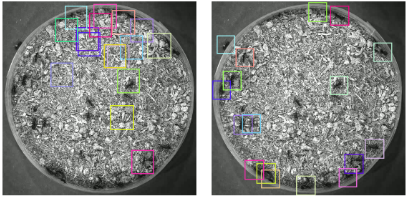
Tab. 2 summarizes our results. To measure the improvement achieved by applying domain adaptation, we compare against the models that do not use domain adaptation. Compared to Trackformer, we achieve more than 40% improvement in HOTA, MOTA and IDF1 metrics. Fig. 6 illustrates the difference between predictions in these two experiments. We note similar significant improvement against other nondomain adaptive approaches.
Compared with detection-based trackers that use domain adaptation in the detection component alone, our methods shows more than 27% improvement in HOTA, MOTA and IDF1. Compared to the best performing baseline, Adapt DETR, i.e. DETR with integrated domain adaptation strategy,
- (a) Trackformer trained on source data
(b) Our approach
Figure 6: We achieved a significant tracking improvement by applying our proposed domain adaptation techniques. This illustrates detections without (a) and with (b) domain adaptation.
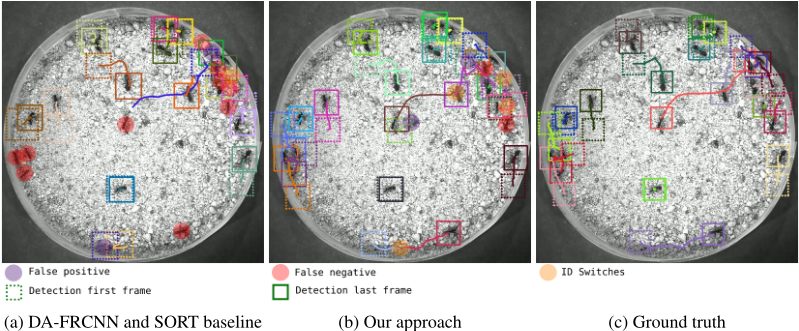
followed by SORT or EMD tracker, our method still shows more than 16% improvement. Fig. 5 shows the difference between baseline and proposed approach track predictions.
To report an upper bound on the performance, i.e. an overly optimistic best case scenario, we trained a separate model directly on the target domain's training split in a supervised way assuming the annotated data is available. As expected, this approach performs better than our proposed framework.
Ablation study: Table 3 shows the result of the ablation study conducted to understand the contribution of each component. The results demonstrate the each discriminator's contribution to the final performance. Using only the visual feature discriminators, the performance can be improved considerably; However it still produces many false positives. This higher false positive rate is a result of object queries and track queries not being properly optimised for the target domain data. The integration of the track-level discriminator significantly reduces the number of false positives.
6 Conclusion
We have introduced a new multi-object tracking model capable of domain transfer. This was achieved by integrating multiple unsupervised adversarial discriminators at different processing stages into a joint-detection-and-tracking model.
| Del | Deg | Dtr | MOTA | IDF1 | HOTA | MT | ML | Frag | FP | ID Sw. |
|---|---|---|---|---|---|---|---|---|---|---|
| - | - - | -1.02 | 0.187 | 0.262 | 57 | 118 | 1148 | 20.87 | 1351 | |
| � | - - | 0.160 | 0.305 | 0.365 | 70 | 88 | 1916 | 5.021 | 5684 | |
| - | � - | 0.301 | 0.325 | 0.331 | 65 | 48 | 1621 | 4.625 | 1996 | |
| � | � | - | 0.381 | 0.453 | 0.445 | 118 | 10 | 1089 | 5.406 | 880 |
| � | � | � | 0.493 | 0.494 | 0.433 | 42 | 42 | 755 | 1.261 | 495 |
Our experiments have shown that our approach can achieve noticeable performance improvements when tracking objects in a new target domain data with different visual appearances and shifted output distributions. This is exactly the case for many ant experiments in collective behaviour studies that use different ant species and different experimental assays.
Multi-object tracking of ant experiments is a core component of experiments in collective behaviour research but training a new model for every different setup and species is not practically feasible, since generating training data is as laborious and costly as tracking the experiment manually and in some cases even more. It is mostly for this reason that many experiments have to fall back on manual tracking. This severely limits experiment sizes and data throughput and thus the value and reach of such experiments. Our technique can clearly help to alleviate this bottleneck.
To encourage other researchers to work in the same space, we have provided a new benchmark dataset for ant tracking based on laboratory experiments. It is clear that this is only the beginning of making untagged multi-insect tracking a routine component in such experiments. We are continuing to expand this proposed model and specifically, we plan to next address the transfer between multiple domains. This will be reflected in the dataset that will be extended accordingly.
@inproceedings{ijcai2023p61,
  title     = {Tracking Different Ant Species: An Unsupervised Domain Adaptation Framework and a Dataset for Multi-object Tracking},
  author    = {Abeysinghe, Chamath and Reid, Chris and Rezatofighi, Hamid and Meyer, Bernd},
  booktitle = {Proceedings of the Thirty-Second International Joint Conference on
               Artificial Intelligence, {IJCAI-23}},
  publisher = {International Joint Conferences on Artificial Intelligence Organization},
  editor    = {Edith Elkind},
  pages     = {546--554},
  year      = {2023},
  month     = {8},
  note      = {Main Track},
  doi       = {10.24963/ijcai.2023/61},
  url       = {https://doi.org/10.24963/ijcai.2023/61},
}
TY - CPAPER TI - Tracking Different Ant Species: An Unsupervised Domain Adaptation Framework and a Dataset for Multi-object Tracking AU - Abeysinghe, Chamath AU - Reid, Chris AU - Rezatofighi, Hamid AU - Meyer, Bernd T2 - Proceedings of the Thirty-Second International Joint Conference on Artificial Intelligence, IJCAI-23 PB - International Joint Conferences on Artificial Intelligence Organization PY - 2023 SP - 546 EP - 554 DO - 10.24963/ijcai.2023/61 UR - https://doi.org/10.24963/ijcai.2023/61 ER -Copied
Machine-readable versions of this paper, for tools and AI agents:





